Your conveyor runs 16 hours a day, with the motor humming constantly and the rollers spinning whether anything’s moving through the line or not. That background noise you’ve stopped noticing is your energy budget draining away.
Most plant managers focus on upfront equipment costs when evaluating conveyors. The real expense shows up months later in utility bills that keep climbing. Line shaft systems draw full power continuously—even when half your line sits empty between production runs.
Walk through during a slow period, and you’ll hear it: motors humming, rollers turning, meters running. All that motion with no productivity. MDR systems work differently. For facilities running multiple shifts, that difference adds up fast.
Why Traditional Conveyors Waste Energy
Line shaft conveyors use a single motor to drive the entire system via belts or chains. Power it on and everything runs—doesn’t matter if you’re moving 200 boxes or sitting idle between batches. The motor keeps spinning, the drive system keeps turning, and your meter keeps running.
Check your conveyor during a changeover when nothing’s moving through. Every roller is still turning. Every bearing is still loaded. Every kilowatt is still getting billed. Zero productivity from any of it.
The design made sense when controls were simple, and energy was cheap. Neither is true anymore. Industrial electricity rates across Canada vary significantly by province, and facilities in higher-cost regions feel the impact more acutely. A conveyor running empty burns the same power as one under load.
How MDR Technology Changes the Game
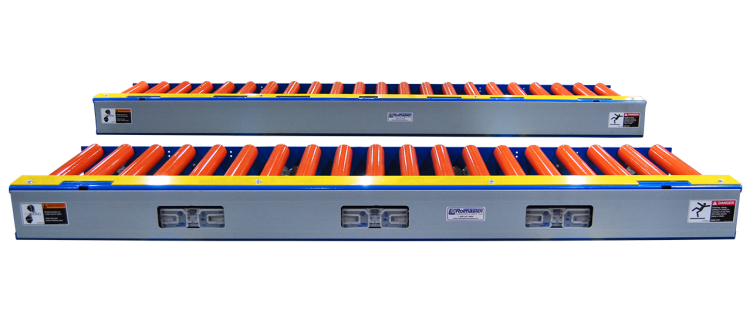
MDR systems utilize 24 VDC motorized rollers to drive individual zones independently. When a product enters a zone, sensors detect it, and power is activated only for the rollers in that zone. When the product moves on, that zone powers down. Explore MDR conveyor specifications.
Motion-sensor lights in your facility work the same way. Lights come on when someone walks through, shut off when the area empties. MDR does this with conveyor zones. You pay for the sections moving product.
The 24VDC conveyor systems use low-voltage motors instead of high-voltage line shaft drives. Lower voltage means lower current draw. And because individual zones operate independently, you’re not powering an entire 100-foot line to move a single carton through one 10-foot section.
Canadian facilities have implemented this approach across distribution centers, automotive assembly lines, and packaging operations. The technology proves itself in real-world conditions where throughput varies throughout shifts.
What the Energy Numbers Look Like
Line shaft systems typically draw 1-3 HP motors running continuously. Convert that to kilowatts over a 16-hour shift, multiply by your local rate, and daily costs add up fast.
MDR systems activate only populated zones. If product occupies 30% of your line, you’re not powering the other 70%. Distribution centers see this most clearly. Incoming trailers don’t arrive on a steady schedule. Product flows in waves—heavy volume for two hours, lighter periods, another surge. Line shaft burns the same power regardless. MDR adapts.
Take a 200-foot conveyor with 20 zones. Full line shaft operation draws 2 HP continuously. MDR averages 4-6 active zones at any time, with individual 24VDC motors drawing considerably less per zone. Energy savings accumulate over three shifts.
Beyond the Utility Bill
Line shaft motors generate heat. Substantial heat during summer months when your facility is already fighting cooling loads. That waste heat makes your HVAC system work harder. You’re paying twice – once for the conveyor power, again for air conditioning to remove that heat.
24VDC conveyor systems produce less waste heat because motors only run when working. Your cooling system handles a lighter load. This matters most in facilities without climate control, where equipment heat affects worker comfort and productivity.
The electrical infrastructure differences matter too. Line shaft systems require heavy-gauge wiring and robust circuit breakers for high-voltage motors. MDR’s low-voltage systems need lighter electrical infrastructure. That’s not just installation savings – it’s ongoing capacity your electrical system can allocate elsewhere.
Where You See the Biggest Impact
Not every operation sees the same energy savings from MDR technology.
Variable throughput operations see the biggest impact. If your line runs at full capacity for two hours per shift, then sits partially empty for the rest of the time, zone control directly addresses that inefficiency. Packaging lines with batch processing. Assembly operations with staggered workstations. Any facility where product flow varies significantly throughout the day.
Multi-shift facilities multiply the savings. A line running 16 hours a day wastes more energy than one running eight hours. The longer your conveyors operate, the more those zone-control savings accumulate. Three-shift operations in distribution centers and automotive manufacturing typically see faster returns.
Accumulation applications practically demand zone control. If your process requires product to queue between stations, you need sections that can hold material without constant motion. Line shaft systems either keep rollers spinning under stopped product (wearing components and wasting power) or use mechanical clutches and brakes (adding maintenance complexity). MDR zones simply stop when the product stops.
The longer your system, the more zones you can control independently – that’s where savings really add up. Applications that require frequent start-stop operations between workstations benefit most from zone-based power management.
Equipment Wear from Empty Running
Equipment running continuously wears faster than equipment cycling based on actual demand. Bearings under constant load accumulate wear hours even when not doing useful work.
Line shaft systems rack up operating hours whether they’re productive or not. Bearings, belts, chains, and sprockets all wear during empty operation. You’re not just paying for wasted energy – you’re shortening component life with no production benefit.
MDR rollers only accumulate wear hours when moving product. A zone that’s powered 30% of the time lasts longer than a line shaft roller spinning 100% of the time. Maintenance intervals stretch. Replacement parts get ordered less frequently.
Individual motor failures still happen. But you’re maintaining based on actual work performed, not on empty runtime.
Integration With Existing Systems
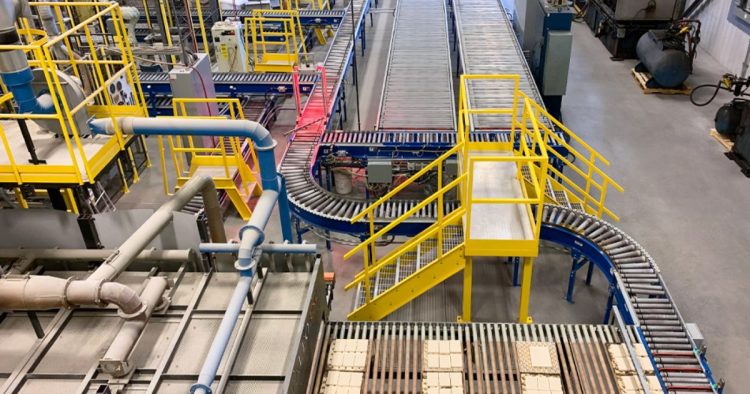
Retrofitting MDR into an existing line shaft system requires evaluation. Frame compatibility matters. Roller spacing, width between frame rails, and mounting configurations all need to match. Sometimes you can reuse the frame. Sometimes you need replacement sections.
Controls integration affects project scope. 24VDC conveyor systems use networked zone controllers communicating via Ethernet. If your facility has modern PLCs and network infrastructure, integration is straightforward. Older plants might need control upgrades to fully leverage zone-based operation.
The Canadian-built MDR systems used in automotive battery tray applications demonstrate what’s possible. Hundreds of meters of conveyor with pop-up transfers, indexing controls, and removable sections – all operating on 24V power with precise zone control.
Making the Cost Comparison
Purchase price tells part of the story. MDR systems typically cost more upfront than line shaft equivalents. The question becomes the payback period based on your specific operation.
Calculate your current conveyor energy consumption. Find your line shaft motor horsepower. Convert to kilowatts. Multiply by your operating hours. Apply your local industrial rate. That’s your baseline annual cost.
Estimate MDR consumption based on typical zone utilization. Calculate the annual difference between continuous line shaft operation and zone-controlled MDR operation. The gap widens when you factor in cooling load reduction for climate-controlled facilities.
Account for potential maintenance interval extensions. Consider electrical infrastructure savings if this is a new installation. Projects with two- to four-year payback periods often proceed. Longer paybacks get harder to justify unless other factors drive the decision – like automation integration requiring precise zone control, or facility expansions where electrical capacity is limited.
When Upgrade Timing Makes Sense
Don’t retrofit a healthy line shaft system just for energy savings unless your utility costs are extreme. But several situations create natural upgrade opportunities.
Capacity expansions provide perfect timing. You’re adding conveyor length anyway. Spec MDR for the new sections and potentially retrofit adjacent areas to maintain consistent control architecture.
Equipment end-of-life is another trigger. When your line shaft system needs major repairs or replacement, that’s when to evaluate alternatives. You’re spending the money regardless, so it is worth comparing options, including MDR vs line shaft energy performance.
Automation projects often justify MDR even without energy payback. If you’re adding robotic cells, vision systems, or automated packaging equipment, the precise zone control and communication capabilities of MDR technology simplify integration considerably.
Facility relocations reset the equation. Moving equipment provides an opportunity to redesign material flow. If you’re reconfiguring your line anyway, that’s when to reassess conveyor technology and reduce energy costs through better system design.
Working With Canadian Suppliers
Canadian conveyor manufacturers understand provincial electrical codes, CSA standards, and the specific challenges of Canadian operating environments.
Proximity matters for custom design work. Face-to-face consultation helps identify energy waste you might not recognize from your daily familiarity with the operation. An outside perspective spots inefficiencies you’ve learned to work around.
Cambridge-based manufacturing means shorter project timelines and easier coordination, without the complications of international shipping. When you’re planning retrofits that require production downtime, timing control becomes critical.
Read our distribution centre case study, which involved replacing the line shaft with an O-Ring MDR, to see what local suppliers deliver: trailer integration, MDR curves that maximize space utilization, and zone control matched to actual operational patterns.
Moving Forward with Energy Efficiency
Your conveyor should support your operation, not drain your budget. Zone-based power control delivers measurable improvements in consumption, particularly for facilities with variable throughput or multi-shift schedules.
Start by documenting current consumption: operating hours, motor loads, and actual costs. That baseline lets you model potential savings. The technology works. Canadian automotive plants, distribution centers, and manufacturing facilities have proven it across demanding applications.
Ready to explore what MDR technology could mean for your operation? Contact our Cambridge team to discuss your specific requirements and determine whether zone-based control delivers meaningful savings for your facility.